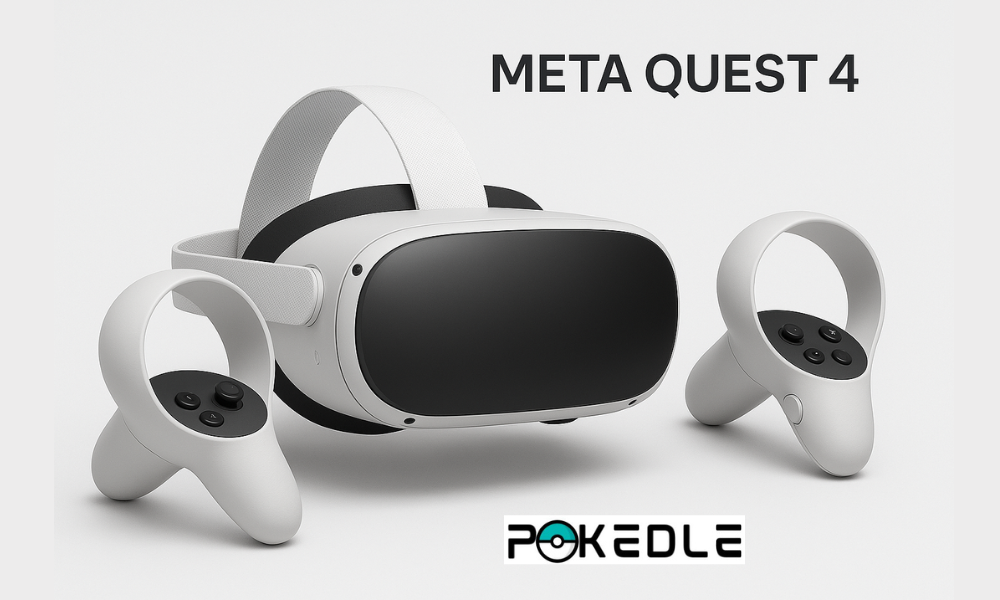
Meta Quest 4: A New Era for VR Begins
The anticipated release of the Meta Quest 4 marks a bold leap into the future of immersive virtual reality. Expected to arrive in late 2026, likely between October and December, this device will succeed the popular Meta Quest 3 and elevate the VR landscape with significant advancements. As VR adoption continues to rise across gaming, enterprise, education, and healthcare, users demand better graphics, more realism, and seamless interactivity. Meta aims to meet these expectations by introducing state-of-the-art features like OLED displays, eye tracking, and a next-generation processor in the Meta Quest 4. Whether you’re a gamer exploring fantasy realms or a professional engaging in remote collaboration, this device promises to enhance your experience tenfold. Meta Quest 4 is more than a hardware update; it offers a glimpse into future digital interaction. With the right blend of performance, design, and innovation, it’s poised to become a VR industry leader.
OLED Displays: Visual Brilliance in the Meta Quest 4
One of the most striking features anticipated in the Meta Quest 4 is its transition to OLED displays. OLED, or Organic Light Emitting Diode technology, delivers deeper blacks, richer colors, and sharper contrast compared to traditional LCD screens. This improvement dramatically enhances immersion by making digital worlds appear more vivid and lifelike. OLED also offers faster response times and reduces motion blur, which is essential for maintaining visual comfort in fast-paced VR experiences. Whether navigating dark corridors in a horror game or working with detailed 3D models in a design application, users will benefit from significantly better visuals. This change is more than cosmetic—it directly impacts user engagement and eye comfort. Meta’s move to OLED shows its commitment to delivering a high-quality visual experience that is vital for extended use. In essence, the Meta Quest 4’s OLED upgrade will redefine how users perceive and interact with their virtual environments.
Eye Tracking and Facial Capture: Humanizing Virtual Avatars
The Meta Quest 4 is expected to bring an entirely new level of realism to avatar interaction with the inclusion of eye tracking and facial expression recognition. Eye tracking allows the headset to follow the user’s gaze, enabling intuitive UI navigation and enhancing social experiences through more realistic eye contact. Facial capture, meanwhile, reads a user’s facial movements to replicate expressions on their avatar in real time. These features will revolutionize how we communicate in the metaverse, adding emotional depth and authenticity. For professional VR meetings or social VR apps, this means conversations will feel more natural and engaging. Rather than static, expressionless avatars, users will be represented by lifelike digital personas that respond and emote. The Meta Quest four will bring people closer in digital spaces, making virtual interactions more similar to real-world encounters. It’s a significant step toward closing the gap between reality and virtual presence.
Snapdragon XR Processor: Powering the Next Generation
At the heart of the Meta Quest 4 lies the rumored next-generation Snapdragon XR processor. This chip promises to deliver significant performance boosts, enabling smoother graphics, faster load times, and support for more complex virtual environments. A powerful processor is crucial for delivering high-quality VR experiences without lag or overheating. It also extends battery life by optimizing power consumption. Whether you’re playing graphically intense games, engaging in multi-user VR meetings, or creating 3D content, the upgraded Snapdragon XR ensures everything runs seamlessly. Meta has continually relied on Qualcomm’s XR line for its performance needs, and the Meta Quest four will likely set a new standard for mobile VR hardware. This leap in processing power enhances gameplay, productivity, and future-proofs the platform for upcoming apps. It’s a major selling point that positions Meta Quest 4 as a top-tier device in the evolving VR market.
Foveated Rendering: Efficient and Immersive Visuals
One of the most innovative features expected in the Meta Quest 4 is foveated rendering. This technique leverages eye-tracking technology to render high-resolution images only where the user is directly looking, while lowering the quality in peripheral areas. The result is a huge performance boost without sacrificing perceived visual fidelity. This method allows developers to create highly detailed environments without overburdening the processor or draining the battery. It’s a smart solution to one of VR’s biggest technical hurdles: achieving top-tier graphics with limited mobile hardware. For users, it translates into crisper visuals, faster frame rates, and reduced latency. Foveated rendering is a game-changer in visual computing and reflects Meta’s dedication to balancing immersion with efficiency. By integrating this technology into the Meta Quest 4, the company ensures users get the most out of their VR experiences—whether they’re gaming, learning, or exploring virtual worlds.
Neural Interface Band: Mind-Controlled Interaction
Perhaps the most futuristic and ambitious feature rumored for the Meta Quest 4 is the neural interface band. Researchers believe this device detects fine motor signals or brainwaves, enabling users to control VR content. If realized, this technology could redefine user input in virtual environments. Imagine selecting menu options, typing, or manipulating objects without needing a controller—just by thinking or subtly moving your fingers. This has profound implications for accessibility, offering users with limited mobility a new way to engage with digital content. Beyond accessibility, it represents a major advancement in human-computer interaction. The neural interface band could make the Meta Quest 4 the most intuitive VR headset ever developed. While Meta hasn’t confirmed this feature yet, industry leaks and ongoing research suggest it’s a likely inclusion or future upgrade. The potential of neural input underscores Meta’s forward-thinking approach and willingness to embrace next-gen technology.
Mixed Reality Enhancements: Blending the Real and the Virtual
Meta is positioning mixed reality (MR) as a central focus of the Quest 4, aiming to enhance spatial mapping and passthrough quality. MR combines digital elements with the real world, enabling users to interact with both simultaneously. Whether it’s placing a virtual desk in your living room or overlaying instructions onto physical objects, the applications are virtually limitless. With enhanced MR capabilities, the Meta Quest 4 will provide more accurate spatial awareness, more natural object interaction, and better environmental scanning. This will benefit gaming, productivity, education, and even fitness applications. Users can enjoy a more immersive experience without completely disconnecting from their surroundings. Improved passthrough means clearer visuals of the real world through the headset’s cameras, making activities like setting up or switching between apps far easier. These features make Meta Quest 4 a versatile device that adapts to various contexts, blending the best of VR and the real world.
Dual Model Strategy: Pismo Low and Pismo High
To accommodate a broader audience, Meta is rumored to be releasing two models of the Meta Quest 4—Pismo Low and Pismo High. The Pismo Low will likely serve as the standard version, offering core features at an affordable price. On the other hand, Pismo High aims to deliver advanced specs and features for power users, professionals, and VR developers. This dual-tier strategy allows Meta to penetrate multiple market segments. Casual gamers and newcomers can opt for the more budget-friendly version, while serious enthusiasts and enterprise users can invest in the premium model. The approach mirrors trends in smartphones and laptops, where product segmentation increases reach and satisfies diverse user needs. By giving users a choice, Meta ensures that the Meta Quest four remains accessible while still pushing the boundaries of what VR technology can offer. It’s a smart move that aligns with Meta’s long-term vision for mainstream VR adoption.
Enterprise Applications of the Meta Quest 4
While gaming is a major use case, the Meta Quest 4 is also expected to shine in professional environments. With eye tracking, high-resolution displays, and enhanced MR, this headset supports collaboration, training, and simulations. Companies can use it for virtual meetings, architectural visualization, remote maintenance, or immersive education. The neural interface band and facial tracking could further enrich business communication by adding realism and intuitiveness to virtual avatars. As remote work becomes more normalized, the need for robust virtual collaboration tools grows. Meta Quest four stands ready to meet this need with its enterprise-ready design and versatile features. Organizations seeking cost-effective ways to innovate or upskill employees may turn to the Meta Quest 4 as a solution. Its adaptability and performance make it a valuable tool for businesses leveraging virtual interaction beyond gaming.
Education and Training with Meta Quest 4
The Meta Quest 4 has immense potential in the education and training sectors. VR learning environments provide unmatched engagement, especially with technologies like eye tracking and mixed reality. In a virtual classroom, students interact with models, participate in simulations, and collaborate from home. The OLED visuals and real-time avatar interactions make the learning experience more compelling and effective. Training scenarios in fields like medicine, engineering, or aviation become safer and more repeatable. Institutions can reduce costs and risks by replacing physical setups with virtual equivalents. The Meta Quest four, with its enhanced capabilities and intuitive controls, becomes an ideal platform for immersive education. As education systems continue to evolve, Meta is likely to lead the transformation by making its next-generation headset a foundational tool in virtual learning.</span>
The Meta Ecosystem: Compatibility and Growth
The Meta Quest 4 will likely integrate seamlessly into Meta’s growing ecosystem, which includes the Horizon Worlds platform, productivity tools, and social experiences. This connectivity ensures users get a cohesive experience across devices and applications. Cross-platform support, app libraries, and cloud syncing will enhance user convenience and engagement. Meta Quest 4 will thrive within an evolving ecosystem, driven by consistent updates and expanding user-focused features. Backward compatibility with Quest 3 apps is also expected, protecting existing user investments and encouraging smooth transitions. The Meta Quest four isn’t just hardware—it’s a gateway into an expanding universe of virtual tools and experiences that keep getting smarter and more interconnected. This ecosystem-oriented strategy ensures long-term relevance and positions Meta as a central player in the future of immersive computing.
FAQs
When is the Meta Quest 4 expected to be released?
The Meta Quest 4 is expected to launch between October and December 2026, though Meta has not officially confirmed the release date.
What are the major upgrades in the Meta Quest 4?
Expected upgrades include OLED displays, eye tracking, facial expression capture, a Snapdragon XR processor, foveated rendering, and possibly a neural interface band.
Will the Meta Quest 4 support mixed reality?
Yes, the Meta Quest 4 is anticipated to offer enhanced mixed reality features like better spatial mapping and passthrough visuals for blending real and virtual environments.
Will there be different models of the Meta Quest 4?
Leaks suggest Meta may release two models: Pismo Low (standard) and Pismo High (premium), catering to different budgets and needs.
Is the Meta Quest 4 suitable for education and professional use?
Absolutely. Its advanced features make it ideal for virtual collaboration, training simulations, and immersive education experiences.
Conclusion Meta Quest 4 — A Game-Changer for the VR Industry
Meta Quest 4 is more than just a VR headset—it’s a technological milestone that aims to redefine how we experience and interact with the digital world. From stunning OLED visuals and eye tracking to neural input and mixed reality, every feature reflects Meta’s vision for a deeply immersive and human-centric virtual future. Whether you’re a gamer, educator, professional, or casual explorer, the Meta Quest 4 promises to offer a transformative experience. Its dual-model approach ensures accessibility without compromising innovation, and its place within the broader Meta ecosystem ensures longevity and relevance. As we approach the expected launch in late 2026, anticipation continues to grow. One thing is clear: the Meta Quest four is set to become the gold standard in VR technology, unlocking new possibilities across entertainment, education, and enterprise.