A clogged drain is one of the most common household problems, and it can quickly turn from a minor inconvenience into a major headache. Whether it’s a slow-draining sink, a backed-up shower, or a completely blocked pipe, knowing how to unclog a drain can save you time, money, and stress. The good news is that most clogs can be fixed with simple tools and techniques—no professional plumber required.
In this comprehensive guide, you’ll learn practical, safe, and effective methods to clear clogged drains, prevent future blockages, and keep your plumbing system running smoothly.
Understanding What Causes Drain Clogs
Before jumping into solutions, it’s important to understand what causes drains to clog in the first place. Different drains tend to collect different types of debris.
In kitchen sinks, clogs are usually caused by grease, oil, food scraps, and soap residue. Over time, these materials stick to the inner walls of pipes and harden, restricting water flow.
Bathroom drains, on the other hand, are often blocked by hair, soap scum, toothpaste, and small particles of dirt. Hair is especially problematic because it tangles and traps other debris, forming stubborn clumps.
Toilets can become clogged due to excessive toilet paper, sanitary products, or non-flushable items like wipes and paper towels.
Understanding the cause helps you choose the most effective unclogging method.
Signs That Your Drain Is Clogged
Clogs don’t always happen suddenly. In many cases, your drain will show warning signs before becoming completely blocked.
A slow-draining sink or tub is often the first indicator. You might also hear gurgling sounds coming from the drain, which suggests trapped air caused by a blockage. Unpleasant odors are another common sign, especially in kitchen drains where food particles may be decomposing.
If water starts backing up instead of draining away, it’s a clear signal that the clog has worsened and needs immediate attention.
Essential Tools for Unclogging Drains
Having the right tools on hand can make the job much easier. Fortunately, most unclogging tools are inexpensive and easy to use.
A plunger is one of the most effective and versatile tools for clearing clogs. A drain snake (also known as a plumber’s auger) is useful for removing hair and debris deep inside pipes. A pair of rubber gloves will protect your hands, while a bucket can catch any water or debris that comes out during the process.
You may also find a wire hanger, baking soda, vinegar, and hot water helpful for natural cleaning solutions.
How to Unclog a Drain Using Boiling Water
One of the simplest methods to unclog a drain is using boiling water. This works especially well for grease and soap buildup.
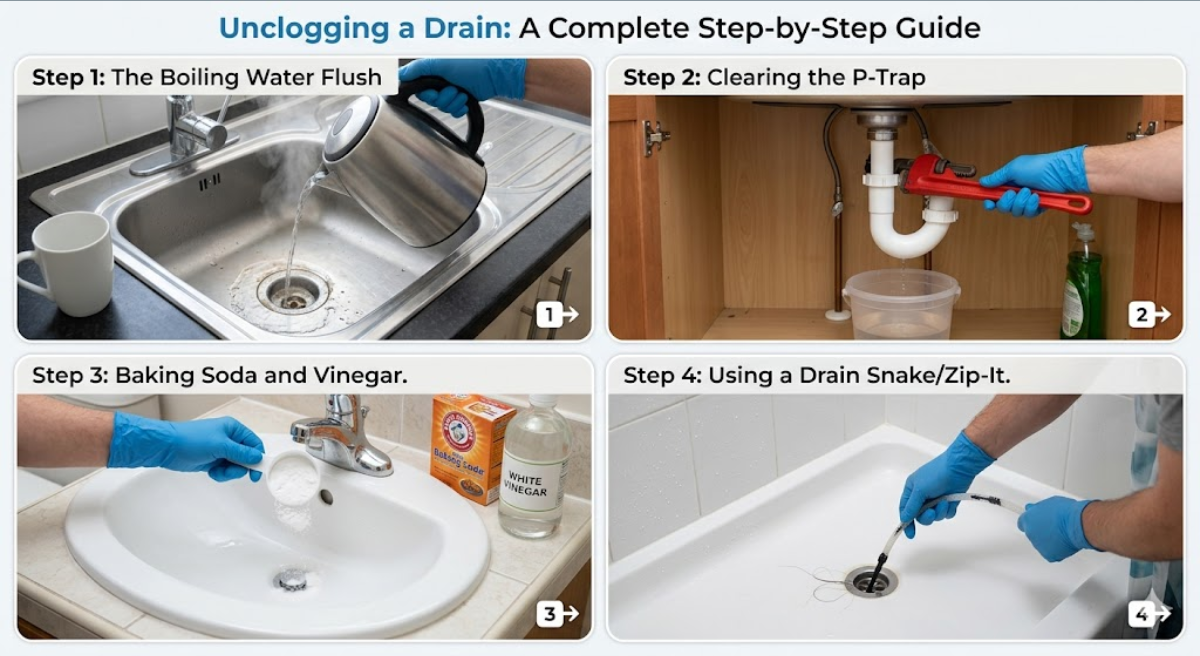
Start by boiling a pot of water. Carefully pour it down the drain in stages, allowing it to work for a few seconds between pours. The heat helps dissolve grease and break down residue clinging to the pipes.
While this method is easy and effective for minor clogs, it may not work for severe blockages or solid obstructions.
Using Baking Soda and Vinegar
If you prefer a natural and chemical-free solution, baking soda and vinegar can be surprisingly effective.
Begin by pouring about half a cup of baking soda down the drain, followed by one cup of vinegar. You’ll notice a fizzing reaction—this helps loosen debris and break apart clogs.
Let the mixture sit for 15 to 30 minutes, then flush the drain with hot water. This method works well for mild to moderate clogs and is also great for eliminating odors.
How to Use a Plunger Effectively
A plunger is often the first tool people reach for—and for good reason. It’s highly effective when used correctly.
Make sure there’s enough water in the sink or tub to cover the plunger’s cup. Place the plunger over the drain, ensuring a tight seal. Push down firmly, then pull up quickly. Repeat this motion several times to create pressure that dislodges the clog.
After a few attempts, remove the plunger and check if the water drains properly. If not, repeat the process.
Clearing Clogs with a Drain Snake
For more stubborn clogs, a drain snake can reach deeper into the pipes.
Insert the snake into the drain and slowly push it down until you feel resistance. Rotate the handle to latch onto the clog, then carefully pull it out. You may retrieve hair, food debris, or other materials causing the blockage.
Once the clog is removed, run hot water to flush out any remaining residue.
Removing and Cleaning the P-Trap
If the clog is located under the sink, it may be in the P-trap—the curved section of pipe beneath the drain.
Place a bucket underneath to catch water. Unscrew the fittings and remove the P-trap. Clean out any debris inside, then reattach it securely.
This method is especially useful for kitchen sinks where food particles often accumulate.
When to Use Chemical Drain Cleaners
Chemical drain cleaners are widely available and can dissolve tough clogs quickly. However, they should be used with caution.
These products contain strong chemicals that can damage pipes if used frequently. They can also be hazardous to your health if not handled properly.
Use chemical cleaners only as a last resort, and always follow the instructions carefully.
Preventing Future Drain Clogs
Prevention is always better than cure. Simple habits can significantly reduce the risk of clogs.
Avoid pouring grease or oil down the kitchen sink. Instead, dispose of it in a container. Use a drain strainer to catch food particles and hair. In the bathroom, regularly clean the drain cover to prevent buildup.
Flushing your drains with hot water once a week can also help keep them clear.
Common Mistakes to Avoid
Many people unknowingly make mistakes that worsen clogs or damage their plumbing.
Using excessive force with a plunger can harm pipes. Mixing chemical cleaners can create dangerous reactions. Ignoring early signs of a clog often leads to more serious blockages.
Another common mistake is flushing non-degradable items down the toilet, which can cause severe clogs.
When to Call a Professional Plumber
While most clogs can be handled at home, some situations require professional help.
If multiple drains are clogged at the same time, it could indicate a deeper issue in your plumbing system. Persistent clogs that don’t respond to DIY methods may also require specialized tools.
A plumber can diagnose and fix complex problems safely and efficiently.
Eco-Friendly Drain Cleaning Tips
If you’re environmentally conscious, there are several eco-friendly ways to maintain clean drains.
Using natural solutions like baking soda and vinegar reduces chemical exposure. Regular maintenance with hot water and mild soap can prevent buildup without harming the environment.
You can also use enzyme-based cleaners, which break down organic material naturally.
Final Thoughts
Learning how to unclog a drain is an essential skill for any homeowner. With the right tools and techniques, you can handle most clogs quickly and effectively without calling a professional.
By understanding the causes, using safe methods, and practicing good maintenance habits, you can keep your drains flowing smoothly and avoid costly repairs.
FAQs
1. What is the fastest way to unclog a drain?
The fastest method is usually pouring boiling water down the drain, especially for grease-related clogs. For tougher blockages, using a plunger is often the quickest solution.
2. Can baking soda and vinegar damage pipes?
No, baking soda and vinegar are safe for most types of pipes. They are a natural and non-corrosive alternative to chemical cleaners.
3. Why does my drain keep clogging?
Recurring clogs are often caused by buildup over time or improper disposal habits, such as pouring grease down the sink or not using a drain strainer.
4. Is it safe to use chemical drain cleaners regularly?
No, frequent use of chemical cleaners can damage pipes and harm the environment. They should only be used occasionally as a last resort.
5. How do I know if the clog is serious?
If water backs up, multiple drains are affected, or DIY methods don’t work, the clog may be serious and require professional assistance.
6. Can hair clogs be removed without tools?
Sometimes, but it’s difficult. A drain snake or even a bent wire hanger is usually more effective for removing hair clogs.